Course 1 · Rehabilitation Counselor Services & Careers
Careers in Vocational Rehabilitation.
Vocational rehabilitation is one of the most diverse and rewarding professions in human services. Rehabilitation counselors help people with disabilities, injuries, mental health conditions, and other barriers to employment achieve meaningful careers, independent living, and a better quality of life.
This overview is drawn from Course 1 — Rehabilitation Counselor Services & Careers. See the full module-by-module outline there.
What rehabilitation counselors do
Across every setting, the work centers on helping people find and keep meaningful employment. Core services include:
Career counselingVocational assessmentsCareer planningJob placementBenefits counselingAssistive technology coordinationCase managementEmployer consultationDisability educationAccommodation planning
Nine sectors
Career opportunities by sector
From state agencies and the VA to hospitals, schools, insurance, private practice, and corporate accessibility teams.
Public sector
- State Vocational Rehabilitation Counselor
- Rehabilitation Counselor
- Rehabilitation Counselor Senior
- Rehabilitation Supervisor
- Regional Administrator
- Program Manager
- Quality Assurance Specialist
- Policy Analyst
- Workforce Development Specialist
- Disability Determination Counselor
Federal government
- Veterans Affairs Rehabilitation Counselor
- Department of Labor Specialist
- Social Security Vocational Expert
- Federal Disability Program Manager
- Department of Education Rehabilitation Specialist
Healthcare
- Medical Rehabilitation Counselor
- Hospital Rehabilitation Counselor
- Oncology Rehabilitation Specialist
- Brain Injury Specialist
- Spinal Cord Rehabilitation Counselor
- Behavioral Health Rehabilitation Counselor
Mental health
- Psychiatric Rehabilitation Specialist
- Supported Employment Specialist
- Clubhouse Coordinator
- ACT Team Vocational Specialist
- IPS Employment Specialist
Education
- College Disability Services Counselor
- Transition Specialist
- School Transition Coordinator
- Postsecondary Disability Coordinator
Insurance
- Disability Case Manager
- Return-to-Work Specialist
- Workers' Compensation Rehabilitation Counselor
- Vocational Evaluator
- Disability Consultant
Private practice
- Vocational Expert
- Independent Rehabilitation Consultant
- Forensic Rehabilitation Consultant
- Life Care Planner
- Expert Witness
Corporate
- ADA Coordinator
- Disability Inclusion Manager
- Accessibility Consultant
- Employee Accommodation Specialist
Nonprofit
- Employment Specialist
- Supported Employment Coordinator
- Independent Living Specialist
- Community Rehabilitation Provider
Credentials that open doors
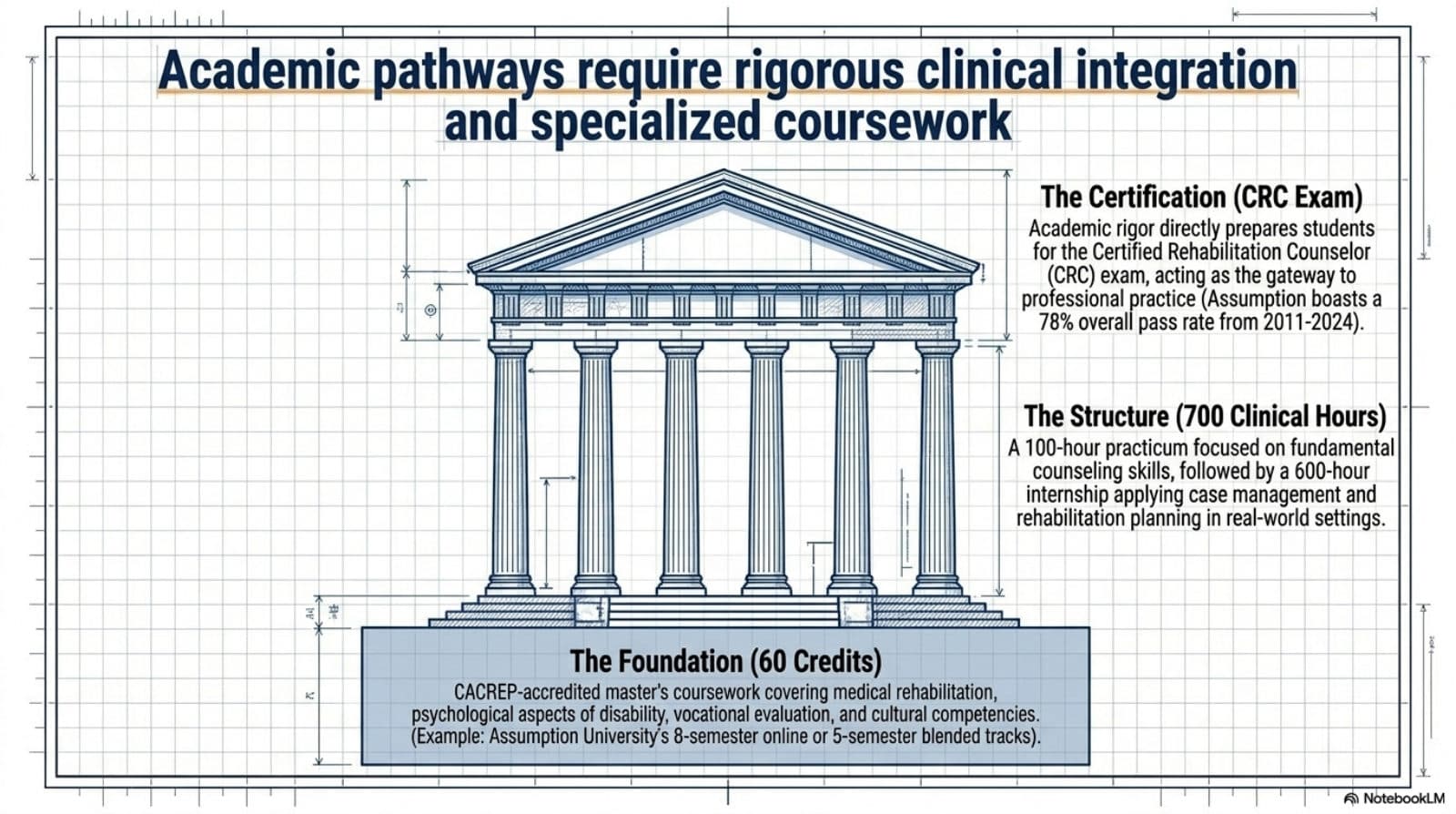
Most positions build on a master's degree in rehabilitation counseling, often from a CACREP-accredited program, plus certification and licensure that match your specialty.
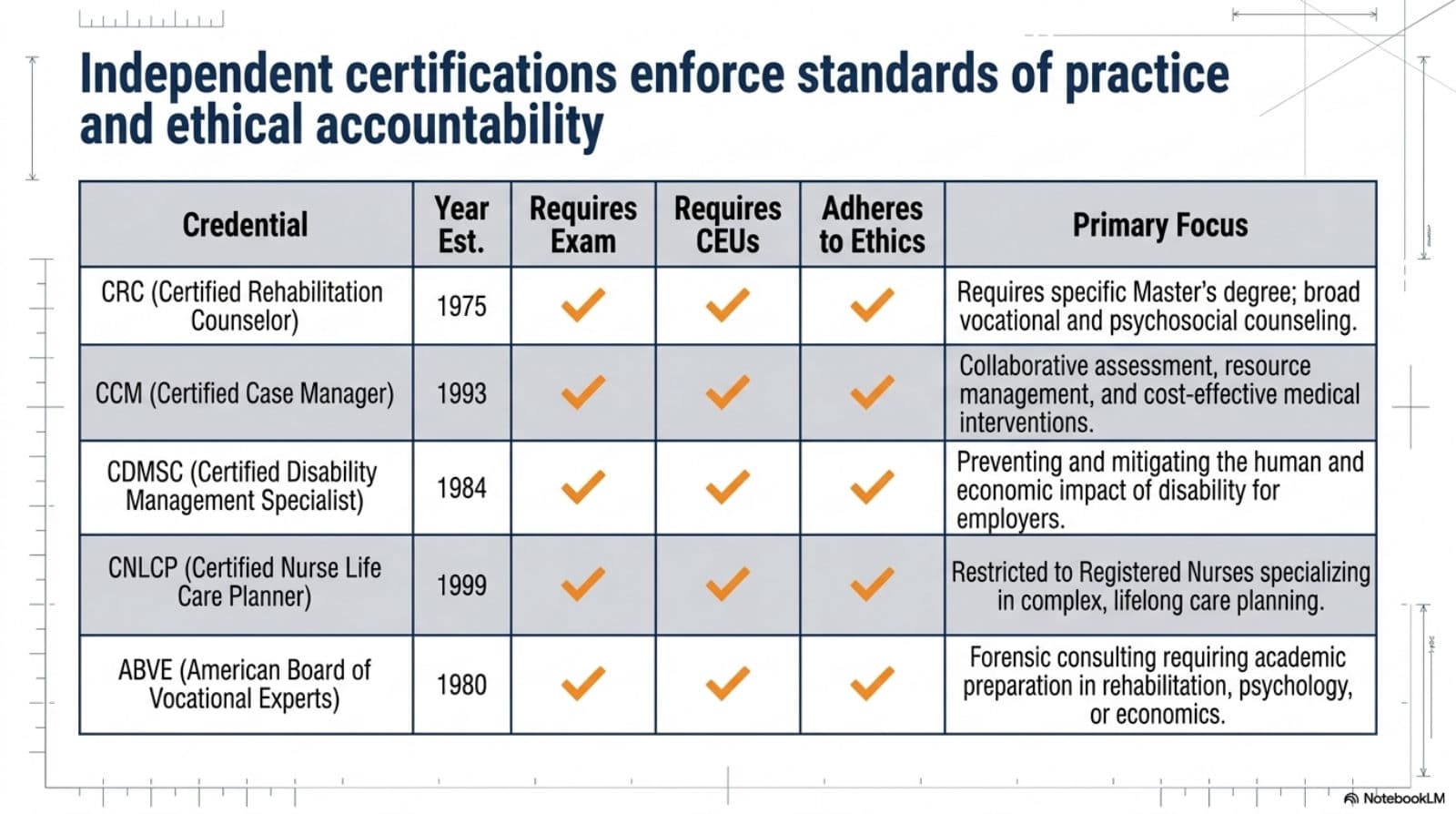
Master's Degree in Rehabilitation CounselingCACREP AccreditationCertified Rehabilitation Counselor (CRC)Licensed Professional Counselor (LPC)Licensed Clinical Professional Counselor (LCPC)Certified Vocational Evaluator (CVE)Certified Disability Management Specialist (CDMS)
Local, state, federal & beyond
Where the work happens
The same job title can look very different depending on who employs you. Here's how the major employment settings differ.
Local & county government
School districts, county health and human-services departments, and local workforce boards. Counselors here often work directly inside schools and community programs — including transition planning for students moving from special education into adulthood.
State government
State Vocational Rehabilitation (VR) agencies are the largest single employer of rehabilitation counselors — caseload-based roles delivering WIOA-funded services, from intake and assessment through job placement and case closure.
Federal government
The Department of Veterans Affairs, Social Security Administration, and Department of Labor employ rehabilitation professionals for veteran readjustment, disability determination, and national workforce policy.
Community Rehabilitation Providers (CRPs)
Nonprofit or for-profit organizations contracted by state VR agencies to deliver hands-on services — job coaching, supported employment, and work-readiness training. Many CRPs specialize in transition-age youth (roughly 14–21), helping students with disabilities move from high school into work, further education, or independent living, often in close partnership with a student's Individualized Education Program (IEP) team.
Nonprofit organizations
Independent living centers, disability advocacy organizations, and mission-driven employment agencies — often the most flexible setting for innovative, client-centered program design.
Higher education
College and university disability services offices support students with accommodations and accessible learning; graduate rehabilitation counseling programs also employ counselor educators and researchers who train the next generation of the field.
Specialties
Fields of vocational counseling
Beyond the employer setting, counselors specialize by the kind of work they do. Here are example job titles and positions across the profession's major practice areas.
Vocational Evaluation & Assessment
- Vocational Evaluator
- Certified Vocational Evaluator (CVE)
- Work Adjustment Specialist
- Assessment Specialist
Job Placement & Supported Employment
- Supported Employment Specialist
- Job Placement Specialist
- Employment Specialist
- IPS Employment Specialist
- Job Coach
Clinical & Mental Health Rehabilitation
- Psychiatric Rehabilitation Specialist
- Behavioral Health Rehabilitation Counselor
- Licensed Professional Counselor (LPC)
- ACT Team Vocational Specialist
Disability Management & Return-to-Work
- Disability Case Manager
- Return-to-Work Specialist
- Workers' Compensation Rehabilitation Counselor
- Certified Disability Management Specialist (CDMS)
Forensic & Vocational Expert
- Vocational Expert
- Forensic Rehabilitation Consultant
- Life Care Planner
- Expert Witness
Transition & Youth Services
- Transition Specialist
- School Transition Coordinator
- Pre-ETS Counselor
- Postsecondary Disability Coordinator
Independent Living & Benefits
- Independent Living Specialist
- Community Rehabilitation Provider
- Benefits Counselor (WIPA / CWIC)
- Peer Support Specialist
Assistive Technology & Accessibility
- Assistive Technology Specialist
- Rehabilitation Technologist
- Accessibility Consultant
- Digital Accessibility Specialist
Business & Employer Services
- ADA Coordinator
- Disability Inclusion Manager
- Employer Consultant
- Accessibility Consultant
Administration, Policy & Leadership
- Rehabilitation Supervisor
- Regional Administrator
- Program Manager
- Bureau Chief
- Policy Analyst / Director
Research & Education
- Rehabilitation Counselor Educator
- Professor
- Researcher
- Quality Assurance Specialist
Emerging fields
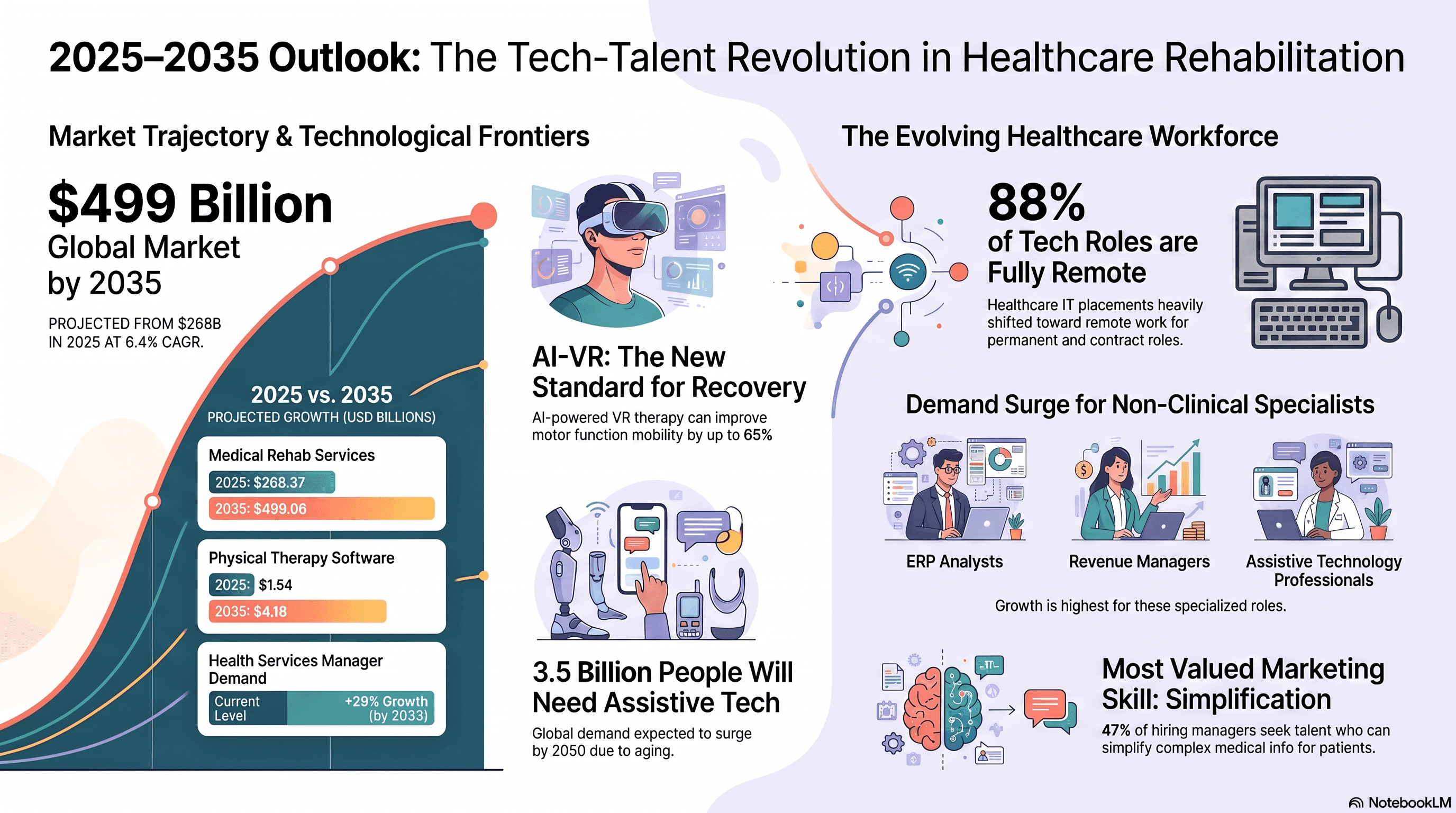
Technology and workforce change are opening new specialties in rehabilitation.
Artificial Intelligence in RehabilitationDigital AccessibilityVirtual Reality RehabilitationRemote CounselingTelehealthAssistive Technology InnovationWorkforce AnalyticsRehabilitation Technology ConsultingHuman-Centered DesignRehabilitation Entrepreneurship
Visual guides
See the field at a glance
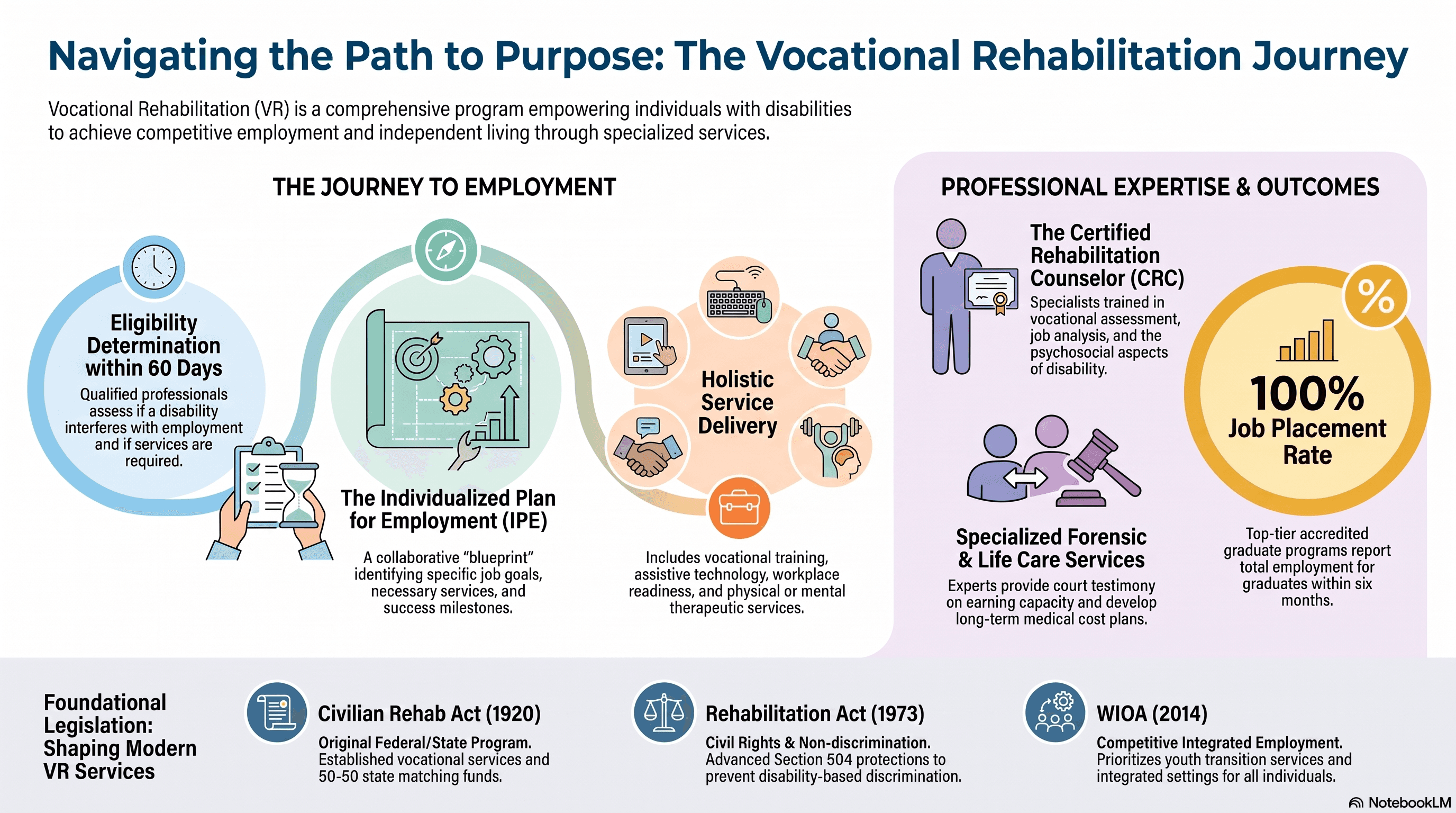
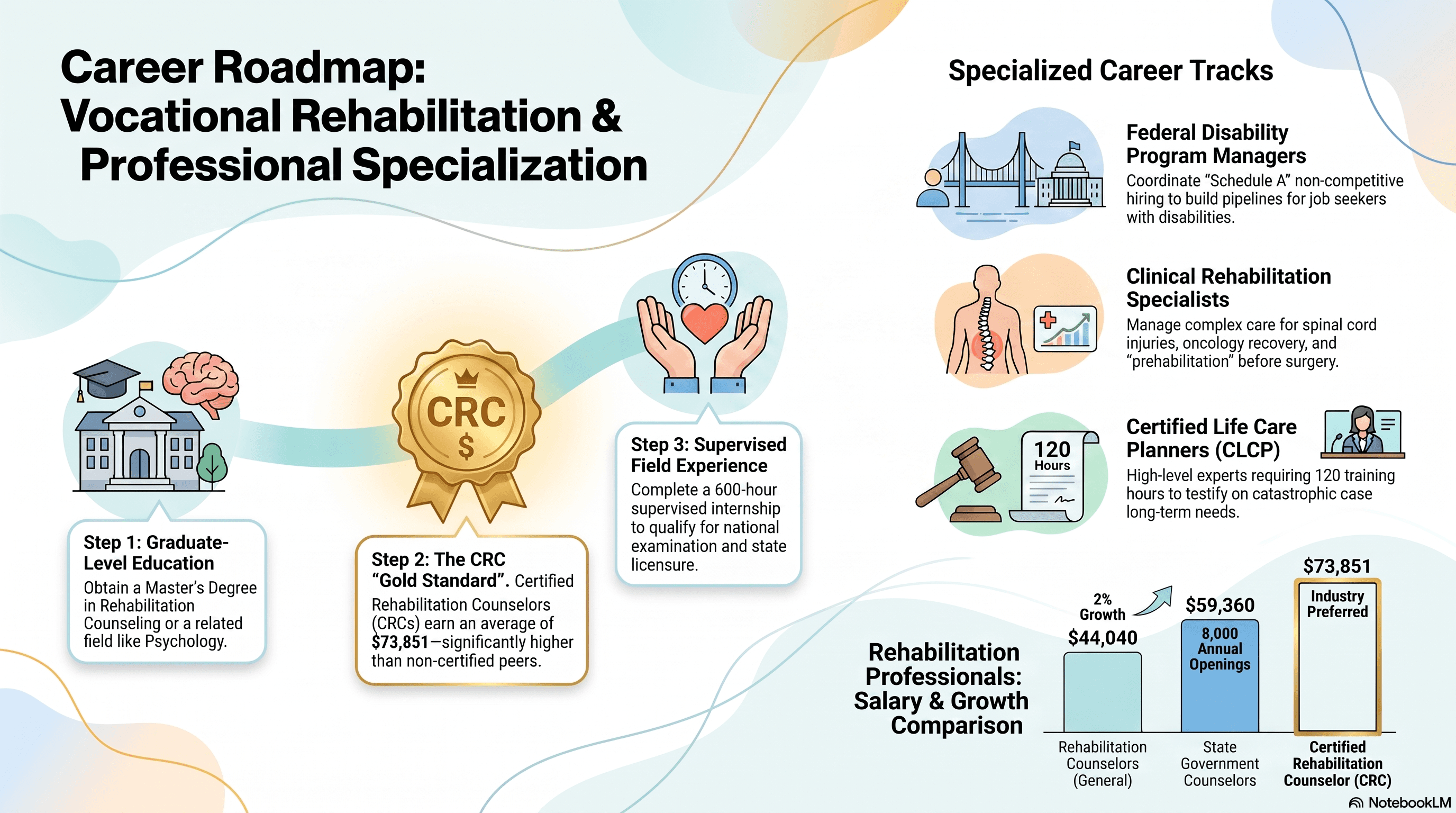
Three visual guides to rehabilitation counseling — the journey, the career roadmap, and where the profession is headed.
Explore it in Pathways Pro
Pathways Pro helps rehabilitation professionals explore these career specialties, compare job titles and responsibilities, identify the education and certifications each path requires, and build an individualized professional development plan. Want to see where you fit? Take the free Interest Profiler and Personality Inventory in the course — no sign-up, instant results.